Main objectives
A comprehensive study is the process of determining the nature and causes of the disease, as well as the condition of the patient. The main goals of diagnosis are as follows:
- It allows you to detect pathologies before the appearance of severe symptoms, which is especially important for such serious diseases as oncology, cardiovascular and chronic diseases. Timely detection significantly increases the chances of successful treatment.
- It helps to establish an accurate diagnosis, determine the stage of the disease and identify possible complications. This is necessary to select the appropriate therapy and monitor the patient's condition.
- It provides an opportunity to evaluate the effectiveness of treatment, monitoring the dynamics of recovery or control of chronic conditions.
- Prevents diseases and identifies risk factors, for example, during medical examinations or in screening programs. This is especially true for people at risk for certain diseases.
- It helps to determine whether a patient's symptoms are related to a particular disease, occupational activity or exposure to external factors.
Thus, this procedure is the foundation of effective medical care, providing doctors with the necessary information to make informed decisions.
Methodologies used
The series of procedures includes a wide range of methods and technologies that can be classified according to various criteria. Our clinic offers modern types of diagnostics used in oncology and other fields of medicine:
- Laboratory - analysis of biological materials (blood, urine, tissue, etc.) to identify deviations from the norm:
- Biochemical analysis of blood - allows you to assess the functional state of organs and systems of the body.
- Analyses for tumor markers are used to identify tumor processes and monitor the effectiveness of treatment.
- Genetic studies are aimed at identifying hereditary predispositions to cancer.
- Instrumental diagnostics - involves the use of specialized equipment for visualization and assessment of the state of organs and tissues:
- Ultrasound (ultrasound) - is used to study internal organs using ultrasound waves.
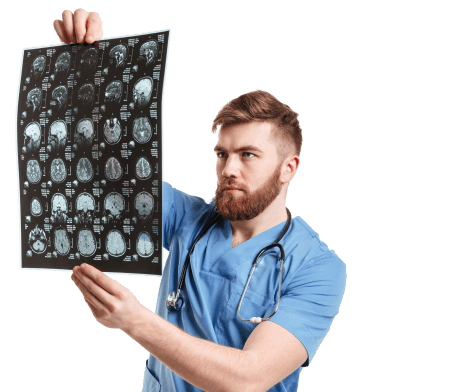
- Radiography and computed tomography (CT) are used to obtain detailed images of bones, organs and tissues.
- Magnetic resonance imaging (MRI) - provides high-precision visualization of soft tissues and organs.
- Endoscopy - allows you to examine body cavities using optical devices, for example, in the detection of diseases of the gastrointestinal tract.
- Radioisotope - used in oncology, based on the use of radiopharmaceuticals (RFP):
- Scintigraphy is a method of imaging organs (for example, thyroid gland, bones, kidneys) using radionuclides. It allows you to identify functional changes, which is especially important for determining cancer.
- Osteoscintigraphy is used to detect bone pathologies, including metastases, due to the high sensitivity of the method.
- Functional diagnosis is aimed at assessing the work of organs and systems of the body:
- Electrocardiography (ECG) is the study of the electrical activity of the heart.
- Electroencephalography (EEG) - analysis of the electrical activity of the brain.
- Socio-medical – takes into account not only the physical, but also the emotional state of the patient, which is important for mental disorders or social problems affecting health.
Each of these methods has its own characteristics and is used depending on the clinical situation and goals. Particular attention is paid to the integration of studies to obtain the most complete picture of the patient's condition.
How the process works
The process of medical diagnosis consists of several consecutive stages, each of which plays an important role in making an accurate diagnosis and effective treatment:
- History. In the conversation, the doctor finds out complaints, medical history, hereditary factors, lifestyle and other aspects that can affect the state of health. This stage allows you to narrow the range of possible diagnoses.
- Clinical examination. Visual and manual examination of the patient is carried out, including palpation, percussion and auscultation. This assesses: posture, appearance, condition of the skin and lymph nodes. For example, percussion helps to identify changes in tissue density, and palpation makes it possible to determine the presence of seals or painful areas.
- Appointment of procedures. Based on the history and examination, the specialist determines what laboratory or instrumental studies are necessary. These can be blood tests, ultrasound, CT, MRI or other methods described above.
- Conducting research. The patient undergoes prescribed procedures in specialized laboratories or centers. An important aspect is proper preparation for the study: for example, biochemical blood tests are taken on an empty stomach, and for some types of ultrasound, a filled bladder is required.
- Results analysis. The obtained data are interpreted by the doctor taking into account the clinical picture and history. In complex cases, a differential examination may be required when several possible diagnoses are compared to rule out errors.
- Establishing a diagnosis and developing a treatment plan. Based on the results obtained, the doctor formulates a diagnosis and develops an individualized treatment plan, which may include drug therapy, surgery or other methods.
- Monitoring and re-examination. After initiation of treatment, control examinations can be carried out to assess the effectiveness of therapy and adjust the treatment plan.
Modern technologies, such as digital image processing or molecular methods, significantly increase the accuracy and speed of research.
The quality of medical diagnostics directly depends on the professionalism of doctors, laboratory assistants and other specialists involved in the process. Neuro-clinic employs highly qualified specialists with deep knowledge and experience in this field. Their professionalism is manifested in the accurate interpretation of research results, the use of modern technologies and an individual approach to each patient. And affordable prices allow you to get help to everyone who needs it.






 Children
 Adults