





The list of services is being updated.
For all necessary information, you can contact us by phone: 8 (8652) 20-55-66


The list of services is being updated.
For all necessary information, you can contact us by phone: 8 (8652) 20-55-66
The list of services is being updated.
For all necessary information, you can contact us by phone: 8 (8652) 20-55-66
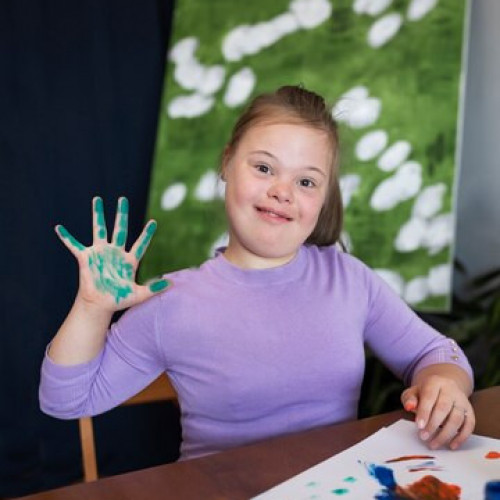
Cure of chromosomal abnormalities is currently impossible, but systematic medical supervision and corrective care for children with Down syndrome allow to achieve success in their development, socialization and acquisition of work skills.
Most patients with Down syndrome have intellectual development disorders - usually mild or moderate mental retardation. Motor development of children with Down syndrome lags behind peers, as there is a systemic underdevelopment of speech. Our medical center has developed unique rehabilitation schemes for children with Down syndrome, which are aimed at treating mental retardation and speech development delays.
To stimulate and develop mental functions, we use the method of bioacoustic brain correction, physiotherapy, exercise therapy, transcranial micropolarization.
In combination with training on simulators with biological feedback (BF).
To develop psycho-speech and communication skills, children with Down syndrome need classes with a neuropsychologist, speech therapist.
An important role is played by psychological and pedagogical support of families where they are brought up.«sunny».
In all cases, children with Down syndrome are classified as children with special educational needs, so they need additional help from teachers and social teachers, the use of special educational programs, and the creation of a favorable and safe environment.
The learning and socialization opportunities of people with Down syndrome vary; they depend largely on the intellectual abilities of children and on the efforts made by parents and teachers. In most cases, children are able to inculcate the minimum household and communication skills needed in everyday life. At the same time, there are cases of success of such patients in the field of fine arts, acting, sports, as well as higher education. Adults with Down syndrome can lead an independent life, master simple professions, create families. About the prevention of Down syndrome can be spoken only from the position of reducing possible risks, since the probability of the birth of a sick child exists in any couple. Obstetricians and gynecologists advise women not to postpone pregnancy until late age. Predicting the birth of a child with Down syndrome is designed to help genetic counseling families and a prenatal screening system.
The birth of a child with Down syndrome is not related to lifestyle, ethnicity and the region of residence of the parents. The only reliably established factor that increases the risk of having a child with Down syndrome is the age of the mother. So, if women under 25 years of age have a probability of having a sick child is 1:1400, by 35 years already 1:400, by 40 years - 1:100; and by 45 - 1:35. First of all, this is due to a decrease in control over the process of cell division and an increase in the risk of chromosome nondivision. However, since the frequency of birth in young women is generally higher, according to statistics, 80% of children with Down syndrome are born to mothers under the age of 35. According to some reports, the age of the father older than 42-45 years also increases the risk of developing Down syndrome in a child.
It is known that in the presence of Down syndrome in one of the identical twins, this pathology in 100% of cases will be present in the other. Meanwhile, fraternal twins, as well as brothers and sisters, the probability of such a coincidence is negligible. Among other risk factors–the presence in the family of persons with Down syndrome, the age of the mother is younger than 18 years, the carrier of translocation by one of the spouses, closely related marriages, accidental events that disrupt the normal development of germ cells or the fetus.
Thanks to preimlantation diagnosis, conception with ART (including in vitro fertilization) significantly reduces the risk of having a child with Down syndrome in parents at risk, but does not completely exclude this possibility.
Carrying a fetus with Down syndrome is associated with an increased risk of miscarriage: spontaneous abortion occurs in about 30% of women at 6-8 weeks. In other cases, children with Down syndrome are usually born full-term, but have moderately severe hypoplasia (body weight is 8-10% below average).
Most children with Down syndrome are characterized by typical external signs that suggest the presence of pathology at the first examination of the newborn by a neonatologist.
Children with Down syndrome may have some or all of the physical characteristics described below.
80-90% of children with Down syndrome have craniofacial dysmorphia: flattened face and nose, brachycephalus, short wide neck, flat neck, deformity of the ears; newborns–characteristic skin fold on the neck. The face is distinguished by a Mongoloid eye incision, the presence of an epicanthus (a vertical fold of skin covering the inner corner of the eye), microgeny, a half-open mouth often with thick lips and a large protruding tongue (macroglossia). Muscle tone in children with Down syndrome is usually reduced; there is hypermobility of the joints (including atlanto-axial instability), chest deformity (keel-shaped or funnel-shaped).
Characteristic physical signs of Down syndrome are meek limbs, brachydactyly (brachymezophalangia), curvature of the little finger (clinodactyly), transverse («monkey») palm fold, wide distance between 1 and 2 toes of feet (sandala slit), etc. When examining children with Down syndrome, white spots are detected along the edge of the iris (Brushfield spots), Gothic (arco-shaped palate), incorrect bite, grooved tongue.
With a translocation variant of Down syndrome, external signs appear more clearly than with a simple trisomy. The severity of the phenotype in mosaicism is determined by the proportion of trisomal cells in the karyotype.
In children with Down syndrome, more often than others in the population, there are CHDs (open arterial duct, DMVP, DMPT, tetrad Fallot, etc.), strabismus, cataracts, glaucoma, hearing loss, epilepsy, leukemia, gastrointestinal defects (atresia of the esophagus, stenosis and atresia of the duodenum, Hirschsprung's disease), congenital dislocation of the thigh. Characteristic dermatological problems of puberty are dry skin, eczema, acne, folliculitis.
Children with Down syndrome are often ill; they suffer more severe childhood infections, more often suffer from pneumonia, otitis media, SARS, adenoids, tonsillitis. Weak immunity and birth defects are the most likely cause of death in the first 5 years of life.
Patients with Down syndrome are prone to the development of obesity, constipation, hypothyroidism, nest alopecia, testicular cancer, early onset of Alzheimer's disease, etc. Men with Down syndrome are generally infertile; women's fertility is markedly reduced due to anovulatory cycles. The growth of adult patients is usually 20 cm below average. Life expectancy is about 50-60 years.
For the prenatal detection of Down syndrome in the fetus, a prenatal diagnostic system is proposed. Screening of the I trimester is carried out at the gestational period of 11-13 weeks and includes the identification of specific ultrasound signs of anomaly and the determination of the level of biochemical markers (hCG, RARR-A) in the blood of a pregnant woman. Between 15 and 22 weeks of pregnancy, screening of the second trimester is performed: obstetric ultrasound, maternal blood test for alpha-fetoprotein, hCG and estriol. Taking into account the age of the woman, the risk of having a child with Down syndrome is calculated (accuracy - 56-70%; false positive results - 5%).
Pregnant women at risk for the birth of a child with Down syndrome are offered prenatal invasive diagnosis: chorionic biopsy, amniocentesis or cordocentesis with fetal karyotyping and consultation with a medical geneticist. When receiving data for the presence of Down syndrome in a child, the decision on prolongation or termination of pregnancy remains with the parents.
Newborns with Down syndrome in the first days of life need Echocardiography, ultrasound of the abdominal cavity for early detection of congenital malformations of internal organs; examination of a pediatric cardiologist, pediatric surgeon, pediatric ophthalmologist, pediatric orthopedic traumatologist.


