





The list of services is being updated.
For all necessary information, you can contact us by phone: 8 (8652) 20-55-66


The list of services is being updated.
For all necessary information, you can contact us by phone: 8 (8652) 20-55-66
The list of services is being updated.
For all necessary information, you can contact us by phone: 8 (8652) 20-55-66
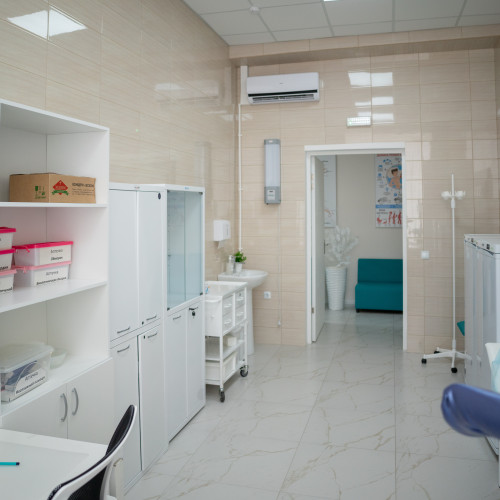
The multidisciplinary medical centre Neuro-clinic in Stavropol offers paid treatment room services. Prices depend on the complexity of the procedure, the cost of consumables and medicines. The nurses working in the treatment room are highly qualified and experienced. They easily perform infusions (drips) and injections of any complexity. All procedures are performed only with a doctor's prescription, which can be obtained from a Neuro-clinic specialist or another medical institution.
The reason for visiting the treatment room is the need for diagnostic or therapeutic procedures. The attending doctor fills in the prescription sheet in detail, specifying the type of procedures, their frequency and the dosage of medicines. Only with this referral will the treatment nurse draw up a visit schedule for the patient.
The treatment room is available not only to patients being treated at the clinic. You can also come with a referral from another institution. Performing procedures in a clinical setting is especially important:
The treatment room of the multidisciplinary medical centre is open all day, without lunch breaks or days off, so patients can visit at a convenient time.

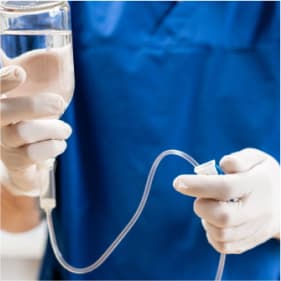
The procedure is a slow, drip-by-drip administration of a drug dissolved in a large volume of fluid (200 ml or more).
Only disposable infusion systems and needles are used for infusions, which ensures absolute sterility. The drip rate is adjusted according to the doctor's recommendations, and the patient's condition is constantly monitored.
Intravenous drip infusion – a fairly long procedure. Some medicines can cause dizziness. To avoid even minimal discomfort, there is a couch in the treatment room. Before each new patient, the nurse covers it with a fresh disposable sheet.
Another feature of infusions is the duration of the procedure. To avoid injury to blood vessels during the procedure, catheterisation is used. A catheter (a thin tube with a needle inside) is inserted into the vein.
After the procedure, the needle is removed and the catheter is secured to the skin with special wings. An intravenous catheter is worn for no more than three days.
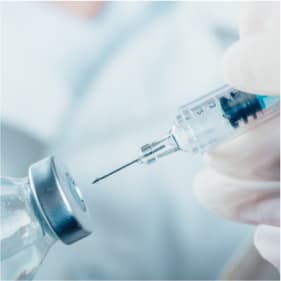
Injection of medicines – an important part of treatment in all areas of medicine. It provides better bioavailability. Injections take literally a couple of minutes and have no contraindications. Several types of injections are distinguished by the technique of drug administration.
Subcutaneous injections. The medicine is injected into the subcutaneous fat layer, which contains many blood vessels. From there it slowly, smoothly and evenly spreads first into the general bloodstream and then throughout the body. This method is used for drugs that require slow, even release, such as insulin or some hormones.
Intravenous injections. They are performed when a rapid therapeutic effect is needed. The drug is injected directly into the bloodstream, from where it quickly spreads throughout the body.
Intra-articular injections. This method of drug administration is used in the complex therapy of inflammatory and degenerative joint diseases in order to avoid or significantly delay surgery. The procedure is technically complex and requires highly qualified medical staff.

Once the doctor has prescribed a course of injections or drips and issued a referral, the patient needs to come to the treatment room with the necessary documents. If necessary, you can book a convenient time in advance. You can bring your own medicines or pay for them separately at the clinic.
The patient sits or lies down on the couch, the nurse treats the skin with an antiseptic solution and performs the injection using a disposable syringe or infusion system. The procedure takes from 2-3 minutes to several hours depending on the type of manipulation. Afterwards, the skin is treated again and a sterile dressing is applied if necessary. All manipulations are carried out in compliance with the rules of asepsis and antisepsis, and the patient's condition is constantly monitored by medical staff.


