





The list of services is being updated.
For all necessary information, you can contact us by phone: 8 (8652) 20-55-66


The list of services is being updated.
For all necessary information, you can contact us by phone: 8 (8652) 20-55-66
The list of services is being updated.
For all necessary information, you can contact us by phone: 8 (8652) 20-55-66
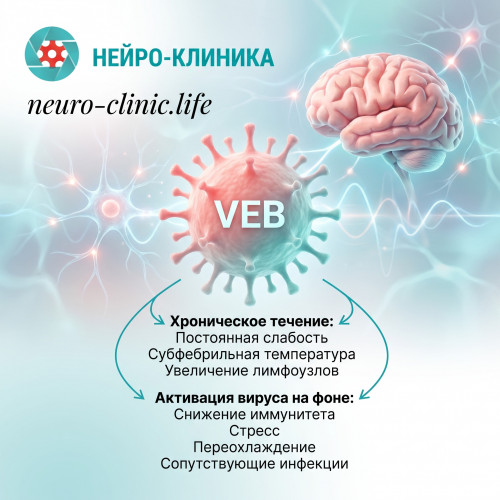
Epstein-Barr virus (EBV) is one of the most common viruses on the planet, infecting more than 90% of the adult population. However, in some people, it can cause a chronic course accompanied by persistent weakness, low-grade fever, and swollen lymph nodes.
Virus activation occurs against a background of decreased immunity, stress, hypothermia, or concomitant infections. It is important to recognize the symptoms in time and begin competent treatment to avoid serious complications.
Diagnosing chronic EBV infection is somewhat challenging, as its symptoms often masquerade as other diseases – from the common cold to chronic fatigue syndrome. The key sign is a prolonged elevated temperature within the range of 37–38°C, which persists for weeks and even months.
Patients complain of severe weakness, fatigue, and decreased performance that do not go away even after proper rest. Muscle and joint pain often accompany these symptoms, significantly reducing quality of life.
To confirm virus activity, we conduct laboratory diagnostics – testing for antibodies to EBV capsid, early, and nuclear antigens, as well as PCR testing for viral DNA in the blood. This allows us to determine the stage of infection and its degree of activity.
Making a correct diagnosis requires experience and a comprehensive approach, since EBV can mimic other diseases. Therefore, it is important to consult specialists who are proficient in modern methods of diagnosis and treatment of this infection.
Therapy for EBV infection is always comprehensive and aimed at suppressing virus activity, strengthening the immune system, and eliminating symptoms of intoxication. The main goal is to transition the virus from an active phase to a latent state, in which it does not pose a health threat.
For this purpose, interferon drugs, interferon inducers, and other antiviral agents are used to help the body independently cope with the infection. Depending on the severity of the condition, treatment can be carried out either on an outpatient basis or in a day hospital setting.
The patient is advised to maintain a daily routine, eat a balanced diet, and avoid stressful situations. It is also important to monitor liver function, as Epstein-Barr virus can cause elevated liver enzymes.
Treatment usually lasts several months, and its effectiveness largely depends on timely consultation and adherence to all specialist recommendations. We regularly monitor progress and adjust the treatment regimen as the condition improves.
Competent and consistent therapy allows for stable remission and significant improvement in well-being within just a few weeks. Patients report normalization of temperature, disappearance of weakness, and restoration of performance.
Muscle discomfort and joint pain subside, lymph nodes decrease in size, and normal sleep and emotional background are restored. The person once again feels energetic and capable of living a full life.
It is important to understand that complete elimination of the virus is impossible – it remains in the body for life, but under the control of the immune system. The main goal of treatment is to achieve a state in which the virus is not active and cannot harm health.
By contacting the Neuro-Clinic, you will receive comprehensive care, modern methods, and an individual approach to solving your problem. Our specialists will help you gain control over the Epstein-Barr virus and restore your quality of life.


