





The list of services is being updated.
For all necessary information, you can contact us by phone: 8 (8652) 20-55-66


The list of services is being updated.
For all necessary information, you can contact us by phone: 8 (8652) 20-55-66
The list of services is being updated.
For all necessary information, you can contact us by phone: 8 (8652) 20-55-66
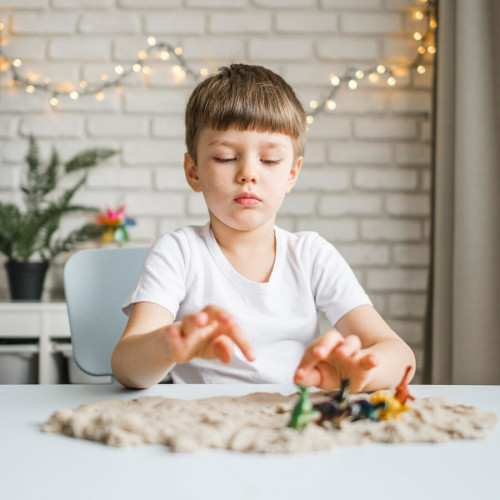
Sand games were first described as a method of consultation by Margaret Lovenfeld.–English pediatrician who worked in the 20s of the 20th century. This therapy she used, working with children with psychological problems. Children were provided with a tray of sand, water and figurines, with which they created compositions, often called«My world.»That's why Margaret called it.«Building peace».
Then Jungian child therapist from Switzerland Dora Kalff defined the basic principles of Jungian methodology for sand therapy. She believed that the paintings and«construction»Sand can tell a lot about the psychological state of a person. Dora introduced current standards: the size and color of the sandbox, its location on the table, the need for a jug with water and figures. The therapist called this technique Sand Play.«sand-play», «sand-game»). At first, sand therapy was used to work with children of early preschool age (from 2-3 years), but then it became a full part of art therapy and gestalt for adults, as well as family psychotherapy.

Playing with sand develops imagination, helps to open the child«I»Connect the inner and outer worlds.
With the help of sand, you can say what you cannot express in words, visualize the subconscious. Sand, water, figures are used for the game.–All this helps to fully manifest imagination and creativity. The possibilities of sand therapy are very wide, it allows you to correct children's fears, find out what the child dreams about, what he cares about, how he sees the ideal world.
The main principle of sand therapy–guide«bridges»between the inner world and the outer, the creation of inner images from matter. Many elements are used for sand therapy.–figurines of animals and people, buildings, plants, cars, fabulous characters. The child creates compositions that can tell a lot about him to a psychologist, in turn gently directing creative actions in the direction of personal development and formation. Building sandy worlds, children unconsciously build them within themselves, putting in order thoughts, driving away fears, eliminating contradictions.
The method of sand therapy is effective primarily for children, it is recommended for those who:
Sand therapy is most useful for the following problems:


